




FOOD & DRINKS
Drinks with pinnekjøtt
Traditionally, Christmas food in Norway is served with beer and aquavit, but in recent years red wine and even white wine and sparkling wine have also found their way onto the Christmas dinner table. Take a look below to learn more about drinks to accompany pinnekjøtt.
Flavourful and fatty food = flavourful drinks
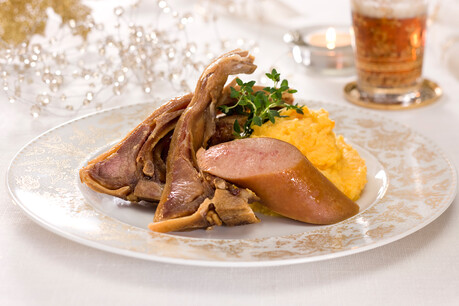
Pinnekjøtt is steamed mutton, typically served with sausages, root vegetable mash and sometimes clear broth from the steaming process. Some people choose to brown the meat in the oven after steaming, others do not.
Like many other Christmas foods such as ribbe, pinnekjøtt is both flavourful and fatty. Obviously, the drink should be equally flavourful so as not to be lost in the combination. If it is wine, it should also have some acidity; if it is beer, some freshness and bitterness to counteract the fat and lighten the meal. However, the absence of crackling and fatty sauces makes the acidity in the wine and the freshness and bitterness in the beer less important for pinnekjøtt than for ribs, for example.
The absence of fatty sauce and crackling also reduces the richness of the meal and allows the drink to be somewhat lighter without being too thin in relation to the food. However, it is the saltiness of the pinnekjøtt and the sweetness of the root vegetable purée that pose the greatest challenges. Salt is well complemented by sweetness. We are familiar with this from combinations such as popcorn and cola. At the same time, the sweetness of the root vegetable purée can steal the slight sweetness that helps to balance a relatively dry wine or a dry beer. In other words, it is an advantage if the drink offers a little sweetness.
Clear broth, instead of brown sauce, for example, and root vegetable purée make pinnekjøtt a little lighter in character, especially if you do not brown the pinnekjøtt in the oven before serving. This light character can be reflected in the choice of drink.
Beer
If you want beer with pinnekjøtt, choose a beer with lots of flavour, some freshness and bitterness, and preferably a little sweetness. The beer does not need to be particularly full-bodied, but the lightest beers can seem a little thin in relation to the food.
Few beers meet all these criteria: some have the sweetness but not the freshness and bitterness, and vice versa. Which beer is best for you depends on two things:
- How much you eat
- How much you like bitterness
If you are one of those who likes to help themselves to several servings and eat until their stomach feels like it is about to burst, then you need a fresh and bitter beer to lighten the meal.
If you are more moderate in how much you eat, the freshness and bitterness of the beer will not play as important a role, and you can prioritise the sweeter beers.
Below are some styles that may suit your preferences (as a rule of thumb, the lighter styles will go well with pinnekjøtt that has not been browned in the oven, while the darker styles will reflect the caramelised tones of browned meat):
- American Pale/Red/Amber Ale – American Ale often uses American and aromatic hops, which gives the beer a lot of flavour. The beer also offers a certain bitterness from the hops and often a lot of freshness from strong carbonation. Since the beer is top-fermented and often contains caramel malt, it tends to have a slight sweetness that can balance the saltiness of the pinnekjøtt and the sweetness of the root mash. Red/Amber Ale in particular has a lot of this malt sweetness.
- Brown Ale – Top fermentation and extensive use of caramel malt, among other things, give Brown Ale both the flavour and sweetness it needs to complement the distinctive and salty pinnekjøtt and the sweet root vegetable purée. With the exception of American interpretations, Brown Ale rarely has much freshness and bitterness, which means that the meal can seem a little heavy, at least if you help yourself to generous portions.
- Oud Bruin – This is a rare beer, but “correct” versions have almost everything you need for pinnekjøtt. Oud Bruin is a sour beer, and therefore has the acidity it needs to combat the fat. In addition, it often has both character and sweetness from over-fermentation and caramel malt.
Aquavit
Christmas aquavit and pinnekjøtt are popular flavours in Norwegian Christmas celebrations. Pinnekjøtt, the traditional dish of dried and smoked lamb, is served with delicious root vegetables and potatoes. The rich, smoky flavour of pinnekjøtt is balanced by aquavit. Christmas aquavit, with its spicy and warm character, enhances the flavours of pinnekjøtt and adds an extra dimension to the meal. This celebration of Norwegian food culture and craftsmanship creates a combination that makes Christmas dinner unforgettable.
Wine
Many people immediately think of red wine when they hear mutton. But considering that the meal as a whole has a fairly light character in terms of root mash, light stock and possibly no browning, white alternatives are not such a bad idea. White wine and sparkling wine are also more often found in slightly sweeter versions that balance the salty character of the mutton and the sweetness of the root mash well.
White wine
Wines made from Riesling grapes often come in both dry and sweeter versions. Semi-dry versions such as halbtrocken or feinherb tend to have the sweetness needed to balance the saltiness of the meat and the sweetness of the root vegetable purée. This grape variety produces wines with good acidity and intense aromas. The high acidity balances the fat. The high aromatic intensity means that the wine has sufficient flavour to accompany the distinctive taste of the cured meat.
See our selection of Riesling wines
Sparkling wine
Sparkling wine comes in many different degrees of dryness. Varieties such as extra dry (extra seco) or dry (seco) have the sweetness needed to balance the saltiness of the pinnekjøtt and the sweetness of the root mash. Most sparkling wines have the acidity needed to balance the fat, but there is great variation in flavour intensity. We therefore recommend varieties with enough concentration to match the distinctive flavour of the pinnekjøtt. Good alternatives include Champagne and premium Crémant and Cava.
See our selection of sparkling wines
Red wine
It can be difficult to find a red wine with enough sweetness to balance both the saltiness of the pinnekjøtt and the sweetness of the root vegetable purée. Try a red wine with a little more sweetness than normal, preferably a style with lots of fruitiness. The light character of the food means that lighter red wine styles are often more suitable than dark ones. The wine should also have low tannins and good acidity to balance the fat. A Pinot Noir or a Barbera can be a good alternative.
Pinnekjøtt with kohlrabi purée
For 4 servings:
- 2 kg pinnekjøtt
- 750 kohlrabi
- 2 large almond potatoes
- 100 g butter
- ½ tsp nutmeg
- 1 tsp salt
- 1 tsp pepper
How to do it:
- Select meaty pieces of pinnekjøtt with moderate fat content.
- Soak the pinnekjøtt in water for at least 24 hours, changing the water after 6 hours. This will make the pinnekjøtt less salty and more tender.
- Place birch sticks in the bottom of a large pot and add the pinnekjøtt. Add water to the pot, but not so much that it comes into contact with the meat.
- Steam the pinnekjøtt for a long time under a lid on low heat, at least 3 hours. The pinnekjøtt will benefit from steaming even longer. Make sure that the pot does not boil dry, refill with water if necessary.
- Remove the skin from the kohlrabi and peel the almond potatoes. Cut them into suitable pieces and boil them in well-salted water until tender. Blend the kohlrabi until almost smooth with a hand blender, add butter and season with nutmeg, salt and pepper.
- Turn on the grill element on the oven and grill the pinnekjøtt lightly for about 5 minutes. Serve with well-cooked almond potatoes and pour some of the delicious cooking liquid over the meat.