


LEARN ABOUT BEER
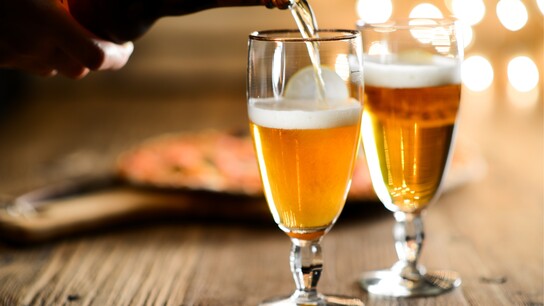
Ironically, Pale Ale is the style for those who like a little colour in their beer. Because Pale Ale is not as pale as it sounds. The beer is typically copper in colour. It is also often a little sweet with a clear touch of both roasted or caramelized notes from the malt and bitterness from the hops. In short, Pale Ale is something for those of you who like copper-coloured beer with a little malty character and sweetness and some bitterness.
Why (not) so pale?
Why isn't Pale Ale as pale as its name suggests? To answer this, we have to travel to Britain before the 18th century. At that time, most British beer was dark. The drying and roasting techniques of the time for malt were not very sophisticated, and it didn't take much for some of the malt to get a dark colour. And a few dark grains are really all it takes for the beer to become quite brownish in colour. With industrialization and the development of better drying and roasting techniques, the process was gradually better controlled, and it became easier to produce lighter beer styles. This style eventually became established as Pale Ale. The beers were indeed light by the standards of the time, but nowhere near what we think of today as light beer, such as Pilsner. The style eventually became so established that the colour and the name became inseparable. Even with the availability of increasingly lighter malt, Pale Ale retained its colour. Even today, producers of Pale Ale typically use malt that has been roasted to preserve some of the beer's original colour.
In short, Pale Ale is for those who like copper-coloured beer with a bit of maltiness and sweetness and some bitterness.
How to choose the right Pale Ale?
Despite many common denominators, Pale Ale is a diverse category. Subtypes such as Bitter, India Pale Ale and Belgian Pale Ale clearly differ from each other in terms of hop aroma and body, among other things. In addition, each of these types comes in many different interpretations. In simple terms, one can distinguish between three main styles of Pale Ale: British, American and Belgian. These are made all over the world. So even if the beer is brewed in the USA, it can be made in the British or Belgian style.
| British variants | American variants | Belgian variants |
| Malt-dominated and fruity | Hops-dominated with characteristic aromas of pine needles and citrus | Complex with hints of fruit, spices and herbs |
American variants - Pine needles and citrus
Many of today's most famous Pale Ale varieties originate from American microbreweries. These have played a major role in developing the beer category into its current diversity, and one of the styles they have played with the most is Pale Ale, and there are several good reasons for this. Americans have their own hop varieties that they willingly use to create variations on classic beer styles. Pale Ale is also well suited to reflecting hops, both because of its slightly toned-down malt character compared to the darkest beer styles and because of the slight sweetness from top fermentation and possibly caramel malt that can balance the bitterness that the hops add. American hop types are typically aromatic with intense aromas of grass, pine needles and citrus fruit, which is clearly expressed in American varieties of Pale Ale.
Many products that are simply called Pale Ale are implicitly American varieties. Others are simply called American Pale Ale. India Pale Ale as we know it today comes almost exclusively in American interpretation.
British variants - Fruit and malty notes
British varieties of Pale Ale differ from the American versions in that they tend to have a more subdued hop character. Traditionally, British hop varieties are used that give more subtle, earthy, spicy, herbal or floral notes. In this way, fruity aromas from the fermentation and roasted or caramelized notes from the malt are emphasized. British variants of Pale Ale are therefore the beer for those who like a lot of fruitiness and graininess.
Belgian variants - Fruits, spices and herbs
Belgian Pale Ale differs from the Anglo-American varieties in that they often have more complex aromas of fruit, spices and herbs from the use of Belgian yeast culture. Unless it is an American interpretation, the hops are typically from the European continent and therefore subtle. Belgian Pale Ale is therefore the beer for those who like complexity without too much hop character.