


LEARN ABOUT COCKTAILS
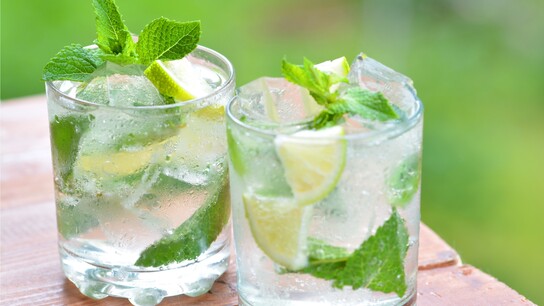
Gin & Tonic can be a refreshing drink with a balance between the sweetness and aroma of gin and the bitterness and freshness of tonic water. It can also be a weak, dull and lukewarm drink with too much gin and a few symbolic ice cubes that are about to drown in their own meltwater. If you're going to make yourself a G&T, do it right!
| Traditional British variant | Modern Spanish variant |
| Highball glass (or tall kitchen glass) | Large, round wine glass |
| Fill the glass to the brim with ice cubes | Fill the glass to its widest point with ice cubes |
| Fill halfway with gin | Cover about half of the ice cubes with gin |
| Top up with tonic | Top up with tonic until the top ice cubes just begin to float |
| Stir gently | Stir gently |
| Garnish | Garnish |
| Serve with a straw | Serve with a straw |
The history of Gin & Tonic
Gin & Tonic probably began its history in the late 1800s in the British colonies in India, where tonic water was used to prevent malaria. Tonic water contains quinine, which has anti-malarial properties. It is also quinine that makes tonic water bitter. The high concentrations of quinine required to achieve the desired effect against malaria made tonic water very bitter at that time. Mixing it with gin reduced the bitterness and balanced it with the sweetness and aroma of the gin.
7 Rules
1. Use a highball glass for a traditional G&T; use a large, round wine glass for a modern twist
Traditionally, G&Ts are served in highball glasses, but a tall kitchen glass will do just fine. An exciting trend is to serve G&Ts in large, round wine glasses. In these glasses, the drink should be mixed up to the widest point of the glass. This gives the drink a large surface area that can release aromas, which are then concentrated towards the rim of the glass. This makes smelling the drink an experience in itself. The garnish also has a little more room to float and thus show itself off.
2. Use plenty of ice
Do not be stingy with the ice: it slows down the cooling process, and the dilution of the drink is the same whether you use a few ice cubes that melt completely or many that cool the drink quickly and therefore cause the ice to melt more slowly. A given amount of ice also makes it easier to get the right proportions of the other ingredients. If you are using a highball glass or a tall kitchen glass, fill it to the brim with ice cubes. If you are using a wine glass, fill it to the widest point.
3. Find your gin
Gin comes in a variety of types. What they all have in common is a dominant juniper flavour, but many producers use a variety of other ingredients, and the alcohol strength, intensity, body and sweetness can vary. Ingredients can range from citrus peel and coriander seeds to lemongrass, peppercorns, cucumber and rose petals. Find the flavours you find most exciting. Go for a Dry Gin for a dry and fresh expression or a Gin that is not labelled "Dry" if you want a slightly sweeter expression.
|
Tip! It's easy to make exciting variations on G&T. Other clear, spicy spirits such as certain types of Genever and Aquavit are good examples. For more body and a pure juniper flavour, try an Oude Genever. Aquavit will add aromas of caraway and/or dill.
|
4. Find your tonic
Tonic water comes in a variety of types with different ingredients and degrees of sweetness. Most gins are made with the intention of being mixed with the major commercial brands, but experiment and find your favourite tonic.
5. Use a maximum of 50% gin
50/50 is a good rule of thumb, but you can adjust the amount according to your own preferences. Gin can vary in strength and character. The stronger and more alcoholic the gin, the less you need. More than 50% gin rarely tastes good.
6. Experiment with the garnish
Slices of lemon and lime are standard garnishes for G&Ts, but there's nothing to stop you from experimenting with more exciting garnishes. Gin is usually made with many different spices, herbs and fruits, and if you have a gin that is made with a slightly unusual ingredient, you can reflect this in the garnish. Everything from cucumber slices, slices of ginger and fruit peel to dried juniper berries, whole cardamom, dried star anise and cinnamon sticks can be used to create a beautiful visual effect and exciting flavours.
7. Always use a straw
Always serve G&T with a straw. Drinking directly from a glass with ice cubes can be awkward and unpleasant, with ice cubes crashing against your lips and teeth or falling into your lap as you take the last sip.